CALL US NOW
 EMAIL US NOW

Riverside Premises Liability Lawyers Holding Property Owners Accountable
A dangerous floor, a broken staircase, inadequate lighting in a parking lot, or a poorly secured pool all raise the same legal question: did the property’s owner or occupier act as a reasonably careful person would have, given the risk the condition created? Unlike a handful of narrow strict liability rules in California law, an ordinary premises liability claim requires proving the owner was negligent, and that is where these cases are won or lost.
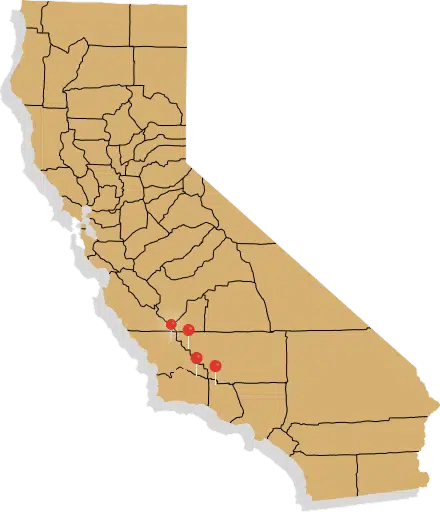
Our premises liability attorneys at The Accident Network Law Group represent injured victims in Riverside, Costa Mesa, Rancho Cucamonga, Apple Valley, Bakersfield, Victorville, and throughout Southern California. Attorney Damoun A. Yazdi brings more than 12 years of personal injury experience and the litigation background of a former law clerk at the Los Angeles County District Attorney’s Office to every case.
California’s statute of limitations gives you two years from the date of injury to sue a private property owner under California Code of Civil Procedure Section 335.1. Contact us for a free consultation. Se habla espanol.
The Legal Basis for Premises Liability in California
California Civil Code Section 1714 establishes the general duty underlying premises liability: everyone is responsible for an injury caused to another by their want of ordinary care in the management of their property. Property owners and occupiers must exercise ordinary care in maintaining their property to avoid harm to people on it.
This duty applies broadly. Following the California Supreme Court’s decision in Rowland v. Christian, the state no longer sorts injured visitors into rigid categories of invitee, licensee, and trespasser to decide what duty is owed. Courts instead weigh the foreseeability of harm, the burden of preventing it, and related factors to decide whether a property owner acted reasonably under the circumstances.
The core question in nearly every premises liability case is the same: did the property owner know, or should they have known through reasonable inspection, about the dangerous condition, and did they fail to fix it or warn visitors within a reasonable time?
Types of Premises Liability Cases We Handle
Our attorneys handle slip and fall accidents on wet floors, spilled liquids, torn carpeting, and uneven pavement; trip and fall accidents from raised sidewalk sections, broken pavement, potholes, and loose flooring; dangerous stairways with broken handrails or inadequate lighting; swimming pool accidents involving missing barriers or slippery pool decks; negligent security cases where an assault occurred because a property failed to provide reasonable protection; inadequate lighting in parking lots, hallways, or stairwells; and falling merchandise or objects from shelves and overhead displays.
Dog bites that occur on someone else’s property are handled differently. Those claims proceed under California’s separate strict liability dog bite statute, which does not require proving the property owner or dog owner was negligent at all, unlike every other premises liability claim described on this page.
What You Must Prove in a Premises Liability Case
To succeed, your attorneys must establish that the defendant owned, occupied, or controlled the property, that the defendant was negligent and failed to use ordinary care, that you were harmed, and that the defendant’s negligence was a substantial factor in causing that harm.
Property owners are liable when they created the dangerous condition themselves, knew about it and failed to fix or warn of it within a reasonable time, or should have discovered it through a reasonable inspection. Commercial property owners are generally held to a higher standard of inspection and maintenance than residential owners, because they know large numbers of customers or visitors will be present.
When the Dangerous Property Belongs to a Government Agency
Premises liability claims against a city, county, or state agency, such as a fall on a poorly maintained sidewalk, a public building, or a park, are governed by a different statute. Under Government Code Section 835, a public entity is liable for a dangerous condition of its property only if the condition created a reasonably foreseeable risk of the injury that occurred and either a public employee’s negligence created it, or the agency had actual or constructive notice of the condition long enough beforehand to have fixed it.
Claims against a government entity also carry a much shorter deadline than an ordinary premises case: a written claim generally must be presented within six months of the injury under Government Code Section 911.2, well before the two-year lawsuit deadline that applies to private property owners.
Negligent Security Claims Follow Their Own Foreseeability Standard
When someone is assaulted or robbed on a property because of inadequate security, California courts apply a sliding-scale foreseeability test refined by the California Supreme Court in Ann M. v. Pacific Plaza Shopping Center and later clarified in Delgado v. Trax Bar & Grill. Minimally burdensome precautions, such as calling police when a known danger is unfolding, only require ordinary foreseeability based on the totality of the circumstances. More burdensome measures, like hiring armed security, generally require a heightened showing, most often proof of prior similar criminal incidents at the same property.
This is a meaningfully different, and often harder, standard to meet than a slip and fall claim, which is why we investigate a property’s crime history and security practices early in any negligent security case.
Swimming Pools and Injuries to Children
California abolished the separate common-law ‘attractive nuisance’ doctrine for child trespassers decades ago; a child’s status as a trespasser is no longer, by itself, the deciding factor in a premises case. Instead, the same ordinary negligence duty of care applies, with courts recognizing that greater care is owed when it is foreseeable that children may encounter a hazard like an unfenced pool.
California’s Swimming Pool Safety Act, Health and Safety Code Section 115922, requires new and substantially remodeled residential pools to include at least two of several approved drowning prevention features, such as pool enclosures, self-latching doors, approved safety covers, or pool alarms. A pool that lacks the required safeguards can support a negligence claim, and in some circumstances a negligence per se claim, against the property owner.
Compensation Available in Premises Liability Cases
Economic damages include medical expenses, lost wages, loss of future earning capacity for serious permanent injuries, in-home care costs, and other quantifiable financial losses. Non-economic damages include pain and suffering, emotional distress, loss of enjoyment of life, and permanent disability or disfigurement.
California places no statutory cap on compensatory damages in a premises liability case; your recovery reflects the full extent of the injury and its impact, supported by evidence rather than limited by an arbitrary maximum.
How The Accident Network Law Group Investigates a Premises Case
Because a premises liability claim turns on what the property owner knew or should have known, our work starts with the property itself, not just the injury.
- We secure incident reports, maintenance logs, and inspection records before they are lost or overwritten
- We photograph and, when needed, retain an expert to document the hazardous condition before it is repaired
- We investigate whether similar incidents occurred at the same property, which is often decisive in a negligent security case
- We identify the correct defendant, whether an owner, a property manager, or a government agency, and calendar every applicable deadline
- Representation is provided on a contingency basis, and your initial consultation is always free
If a property owner’s negligence caused your injury, contact The Accident Network Law Group today for a free consultation. Se habla espanol.