CALL US NOW
 EMAIL US NOW

Truck Accident Attorneys in Riverside Demanding Justice From Those Accountable
Southern California’s freeways carry constant heavy truck traffic feeding the ports of Los Angeles and Long Beach, regional distribution centers, and cross-country freight lanes. When an 80,000-pound tractor-trailer collides with a passenger vehicle, the size and weight disparity alone often decides how serious the injuries will be, and the case that follows is governed by a federal regulatory framework most car accident claims never touch.
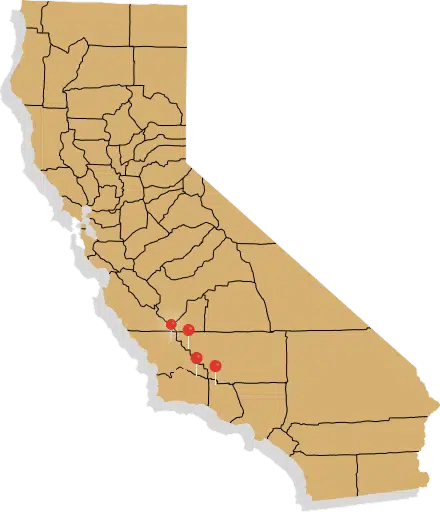
Our firm represents injured clients across Riverside, Costa Mesa, Rancho Cucamonga, Apple Valley, Victorville, and throughout California in claims against trucking companies and the insurers standing behind them. Founding attorney Damoun A. Yazdi has built a personal injury practice over more than a decade, adding the trial-focused discipline of a former Los Angeles County District Attorney’s Office law clerk to how our office prepares every commercial vehicle case. Fees are contingency-based only, so a client never pays out of pocket.
California generally gives you two years from the date of your injury to file suit under California Code of Civil Procedure Section 335.1, but the electronic records that prove a trucking case have a much shorter shelf life. Contact us for a free consultation. Se habla espanol.
Federal Rules That Govern Every Commercial Truck on the Road
Interstate trucking is regulated by the Federal Motor Carrier Safety Administration, and violations of its rules are often the clearest evidence in a truck accident claim. Driver fatigue is a leading cause of serious crashes, and federal hours-of-service rules limit most property-carrying drivers to 11 hours of driving within a 14-hour on-duty window after 10 consecutive hours off, yet violations of that limit remain common and are frequently the central issue in a fatigue-related crash.
Carriers must also maintain driver qualification files, conduct drug and alcohol testing, and follow vehicle inspection and maintenance schedules. Interstate motor carriers hauling general freight must carry at least $750,000 in liability insurance under 49 CFR Section 387.9, a figure large enough to matter when injuries are severe, though it can still fall short in catastrophic cases involving multiple victims.
Beyond the driver, liability can extend to the trucking company under employer liability principles, to a cargo loader whose improperly secured freight shifted or spilled, and to a maintenance contractor whose neglected repairs contributed to a brake or tire failure. A single crash often has more than one responsible party, and identifying all of them matters when a driver’s personal assets or a single insurance policy cannot cover the full loss.
Why Commercial Truck Injuries Are So Severe
The enormous weight disparity between a loaded commercial truck and a passenger vehicle means truck accidents produce disproportionately catastrophic injuries. Rollover and jackknife crashes can crush a smaller vehicle and cause fatal or permanently disabling injuries, and spinal cord injuries from high-impact truck collisions cause paralysis at rates far exceeding other personal injury contexts.
Severe traumatic brain injuries from vehicle intrusion or violent impact often require years of rehabilitation, and internal bleeding and organ damage from blunt force trauma frequently demand emergency surgery. Multiple fractures to major bones, including the femur, pelvis, and spine, are common, and wrongful death claims following a fatal truck accident require sensitivity toward surviving families while still pursuing every category of recoverable loss on their behalf.
Compensation Available in Truck Accident Cases
A serious trucking claim typically involves years of future care, not just an initial hospital stay, and the financial recovery reflects that: emergency and long-term medical treatment, surgery, rehabilitation, wages lost during recovery, any lasting cut to earning capacity, and the cost of the vehicle itself.
Separately, the law compensates the human cost of the crash, the pain, emotional toll, permanent disability or disfigurement, and the loss of the life you had before. Nothing in California statute limits how much a jury can award in compensatory damages here; proof drives the number, not a formula.
When a carrier knowingly sends a driver out in violation of hours-of-service limits or with a known safety defect, that decision can rise to the malice, oppression, or fraud standard under California Civil Code Section 3294, opening the door to punitive damages layered on top of compensatory recovery.
Preserving the Electronic Evidence That Decides Trucking Cases
Modern commercial trucks generate a substantial digital record. Electronic logging devices track a driver’s hours automatically, and the truck’s event data recorder, commonly called the black box, captures speed, braking, and throttle data in the moments before a crash. Many fleets also use GPS telematics and onboard cameras that can show following distance and driver behavior.
None of this data is preserved indefinitely, and some systems overwrite on short cycles. Sending a written evidence preservation demand to the trucking company as early as possible is one of the first steps in building a serious commercial truck claim, alongside the police or CHP collision report, photographs of the scene and both vehicles, and prompt medical evaluation even when injuries do not seem severe at first. Preserve all medical bills, missed-work records, and correspondence connected to the crash, and decline any recorded statement to an insurance company before speaking with an attorney.
A public roadway defect or a government-owned truck in the crash chain changes the timeline: that portion of the claim has to reach the responsible agency within six months under Government Code Section 911.2, well before the standard two-year lawsuit deadline would otherwise run.
How Trucking Companies and Their Insurers Respond to Claims
A serious trucking accident triggers a rapid response from the carrier’s insurer and often its own investigators, sometimes arriving at the scene the same day. Expect an early, friendly outreach and a settlement figure offered well before your medical treatment and long-term prognosis are known; accepting it closes your claim permanently, regardless of what your doctors later discover.
Insurers on the trucking side commonly argue over fault, claim the driver stayed within every regulatory limit, or lean on surveillance and social media to downplay how badly you were hurt. Having worked as a personal injury paralegal before law school and then trained as a law clerk inside the Los Angeles County District Attorney’s Office, Attorney Yazdi has seen both how these files get built and how they get tried. Our office fields every call from the carrier, demands the company’s own compliance and maintenance paperwork, and moves to litigation when the number offered does not reflect the loss.
Contact The Accident Network Law Group After a Truck Accident
More than a decade of representing injury victims across Riverside County, Orange County, and San Bernardino County has given our office a working knowledge of the freight corridors where these collisions cluster and the regulatory paper trail that wins or loses a trucking claim.
- Case handled personally by Attorney Yazdi from intake through resolution
- Full Spanish-language service available for clients and their families; se habla espanol
- Our office answers day or night, including weekends and holidays
- Strictly contingency based: we collect a fee only from money we recover for you
If a commercial truck accident injured you or someone you love, contact us today for a free, no-obligation consultation.
This content is for informational purposes only and does not constitute legal advice. The outcome of any case depends on its specific facts and circumstances. Past results do not guarantee future outcomes. Contact The Accident Network Law Group for advice about your individual situation.