CALL US NOW
 EMAIL US NOW
If you were hurt on someone else’s property and no sign warned you about the hazard, whether it was a wet floor, a broken step, uneven pavement, or an unguarded pool area, the property owner may be liable under California premises liability law. California Civil Code Section 1714 states the general rule that everyone is responsible for injury caused to another by a want of ordinary care in the management of their property or person. The California Supreme Court applied that statute to land occupiers in Rowland v. Christian (1968) 69 Cal.2d 108, which is the source of the modern duty to keep property reasonably safe and to warn of hazards that are not obvious. The absence of a warning sign is meaningful evidence that the duty was breached. It is not, on its own, proof of a case.
Key Takeaways
- Civil Code Section 1714 requires everyone to use ordinary care in managing their property so as not to injure others, and Rowland v. Christian applied that standard to owners and occupiers of land
- Rowland abolished the old invitee, licensee, and trespasser categories, so the duty is one of ordinary care under all the circumstances rather than a fixed rule tied to your legal status, subject to some later statutory exceptions involving trespassers
- The lack of a warning sign is evidence of a breached duty to warn, but you must also prove the owner knew or should have known about the hazard
- Premises liability in California is ordinary negligence, not strict liability. An owner is not automatically responsible just because you were hurt on their property
- A hazard that is genuinely open and obvious may relieve the owner of the duty to warn, though it does not always relieve the owner of the duty to fix it
- The two-year deadline in CCP Section 335.1 applies to premises liability injury claims, and injuries on government property require a written claim within six months under Government Code Section 911.2
California Premises Liability: The Duty to Warn
Before 1968, how much care a California property owner owed you depended on a label: business invitee, social licensee, or trespasser. Rowland v. Christian did away with that structure. Reading Civil Code Section 1714 as the governing rule, the court held that no exception to the general duty of ordinary care should be recognized unless it is clearly supported by public policy, and it replaced the rigid categories with a balancing of factors including the foreseeability of harm, the certainty of injury, and the burden of preventing it. Later legislation carved back a few narrow situations involving trespassers, but the general framework has stood for more than fifty years.
For a lawful visitor, that duty of ordinary care has two practical branches. The owner must repair or remove a known hazard within a reasonable time, and the owner must warn visitors about a known hazard that is not open and obvious while the repair is pending. A warning sign is the cheapest way to discharge the second obligation, which is precisely why its absence stands out.
The mopped floor with no cone is the textbook case. If a store employee wet a floor, posted nothing, and a customer slipped and fell, the store has a serious problem on the duty-to-warn element. The same reasoning reaches a broken stair tread, a missing handrail, a raised walkway seam, an unmarked step down between rooms, or a temporarily disabled pool gate.
What You Must Prove When There Was No Sign
The missing sign helps you, but it does not carry the claim by itself. You still need to establish, in substance, that the owner or occupier controlled the property, that a dangerous condition existed there, that the owner knew about the condition or should have discovered it through reasonable inspection, that the owner failed to repair the hazard or warn about it, and that the condition caused your injury and your losses.
Notice is where most of these cases are won or lost. Actual notice means someone told the owner, whether through a customer complaint, an employee report, a maintenance ticket, or a prior incident at the same spot. Constructive notice means the condition had been there long enough, or was obvious enough, that a reasonably diligent owner should have found it. California law also lets you approach notice from the inspection side: in Ortega v. Kmart Corp. (2001) 26 Cal.4th 1200, the California Supreme Court held that a plaintiff may show constructive notice by proving the area had not been inspected within a reasonable time before the fall, which permits the jury to infer the hazard had been present long enough to be discovered. Inspection logs, sweep sheets, staffing records, and video timestamps are therefore central evidence.
One caveat cuts the other way. If the hazard was genuinely open and obvious, the owner may have had no duty to warn about it, because the condition itself served as the warning. That defense has limits. Where the visitor had to encounter the hazard anyway, for example the only path to a restroom or an exit, the duty to remedy the condition can survive even though the duty to warn does not.
Injuries on Government Property
If the hazard was on property owned or controlled by a city, county, school district, transit agency, or the state, the rules change in two ways that catch people out.
First, the theory of liability is statutory rather than common law. Under Government Code Section 835, a public entity is liable for injury caused by a dangerous condition of its property only if the plaintiff shows the property was in a dangerous condition at the time of the injury, the condition proximately caused the injury, the condition created a reasonably foreseeable risk of the kind of injury that occurred, and either an employee’s negligent or wrongful act created the condition or the entity had actual or constructive notice of it long enough beforehand to have taken protective measures.
Second, the deadline is short. A written claim for personal injury must be presented to the entity within six months of the date the cause of action accrued under Government Code Section 911.2. If that date passes, Government Code Section 911.4 allows an application for leave to present a late claim, but it must be made within one year of accrual and the entity has discretion to refuse it, so the six-month date should be treated as the real one. After a claim is rejected in writing, Government Code Section 945.6 generally allows only six more months to file suit.
Benjamin Ramos
Great service 👏
Contact The Accident Network Law Group About an Unmarked Hazard
The evidence that proves a missing warning sign disappears fast. Cones get put out the next morning, the broken tread gets replaced, and the video of the empty aisle gets overwritten on a thirty day loop. Attorney Damoun Yazdi and the team at The Accident Network Law Group send preservation demands early, pull inspection and sweep records, and photograph the scene in the condition you encountered it so an insurer cannot later claim a warning was there all along. If you were hurt by a hazard nobody bothered to mark, tell us what you saw and what you did not see.
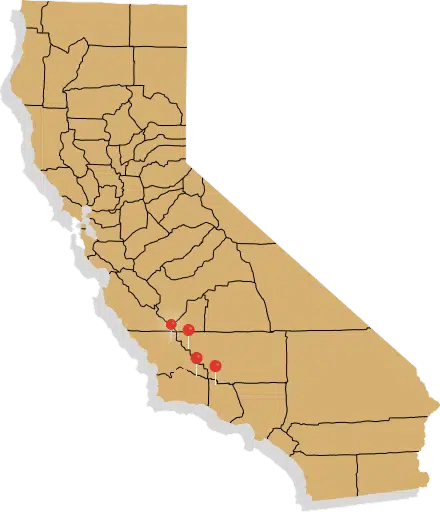
Your consultation is free, and we take California slip and fall claims under a No Recovery, No Fee agreement, so you pay no attorney fee unless we recover for you. We represent injured people in Costa Mesa, Riverside, Rancho Cucamonga, Apple Valley, Victorville, and Bakersfield, and throughout Southern California. Se habla espanol.
Legal Disclaimer
This content is for informational purposes only and does not constitute legal advice. The outcome of any case depends on its specific facts and circumstances. Past results do not guarantee future outcomes. Contact The Accident Network Law Group for advice about your individual situation.